 The Pacific War Online Encyclopedia
|
| Previous: Yazaki Kanju | Table of Contents | Next: Yellow Sea |
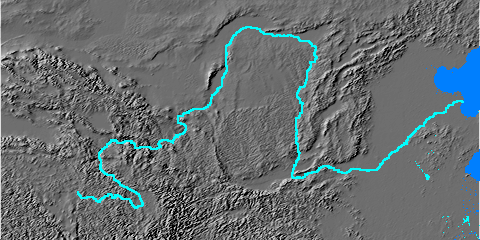
The Yellow River is the great river of northern China. Arising from deep in central Asia, it loops north at Lanchow before passing near Chengchow and through Tsinan to the Bohai Gulf.
The river gets its name from the large amounts of sediment it picks up from the Loess Plateau. In many places in the north China plain, this sediment has been redeposited to produce natural levees that raised the river as much as thirty feet (ten meters) above its surroundings. This has obvious potential for catastrophic flooding, in spite of reinforcement with artificial levees, and the Yellow River is sometimes called "China's Sorrow." On the other hand, the river provided irrigation water, and its sediments contributed to the fertility of the region.
Chiang ordered the levees deliberately breached on 11 May 1938 to thwart the Japanese advance towards Chengchow, then blamed the Japanese for bombing the levees. Few were deceived. The flood waters left an estimated half a million Chinese dead and another three to five million Chinese homeless but only temporarily slowed traffic along the Lunghai railroad. Chiang's act may have had serious repercussions for the Chinese Civil War that followed the Pacific War.
The lower Yellow River valley remained firmly in Japanese hands throughout the Pacific War.
References
The Pacific War Online Encyclopedia © 2007-2009, 2014 by Kent G. Budge. Index