 The Pacific War Online Encyclopedia
|
| Previous: Alamosa Class, U.S. Cargo Ships | Table of Contents | Next: Alaska Class, U.S. Large Cruisers |
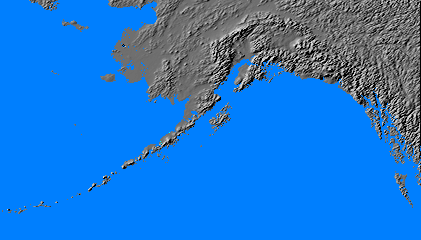
Alaska was large, sparsely inhabited, and
lacking in
infrastructure in 1941, a condition that is still largely true
today. It
was purchased by the United
States from Russia
in 1867 for $7.2 million dollars, provoking
criticism from politicians who thought that even two cents an acre
(Alaska has
a total land area of 570,374 square miles) was too much for frozen
wasteland. In 1912 Alaska was made an incorporated territory of the United States, meaning the territory was fully subject to U.S. law and persons born there were birthright citizens.
A military presence was established as
early as 1898 with the
founding of Fort Kodiak. However, Alaskan forces were
still
small at the outbreak
of war, consisting of four infantry
regiments, a few small warships
based at Kodiak Island
and Juneau
and a few aircraft
based near Anchorage. The population was still only 72,600 when war broke out. Of these, 39,200 were Europeans and the remainder were indigenous peoples, except for 230 persons of Japanese ancestry, half of them citizens, who were interned. The population was swollen by over 100,000 workers after war broke out.
The southern coast of Alaska, particularly the Aleutian island chain, lies very close to the great circle route from the Pacific Northwest to Japan, suggesting that the territory would have great strategic significance in the war. In fact, the climate of the Aleutians was vicious enough to make large-scale military operations all but impossible. The Japanese seized Attu and Kiska in the western Aleutians, and the Americans expended considerable resources effort to drive them out, but the hope that the Aleutians would be a highway to the Kuriles and Japan itself was ill-founded. Alaska remained a secondary theater throughout the war.
References
The Pacific War Online Encyclopedia (c) 2007 by Kent G. Budge. Index