 The Pacific War Online Encyclopedia
|
| Previous: Alor Star | Table of Contents | Next: Amakaze Aircraft Engine |
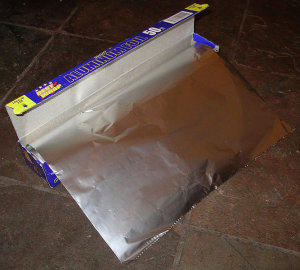
Aluminum is a light, strong, somewhat ductile silvery metal, atomic number 13. It is the best conductor of electricity after copper and silver, and its alloys have a higher tensile strength than those of any metals except iron and copper. It is more resistant to corrosion than iron and has a better strength to weight ratio than steel, making it indispensable for construction of aircraft. However, aluminum does not wear as well as iron, being considerably softer. The Japanese used aluminum extensively for power transmission lines in order to conserve copper.
Aluminum is the most abundant metal in the earth’s
crust, but it is so difficult to extract from its ores that the
price was $374 per ton in 1941, much higher than the price of
either steel ($43 a ton) or copper ($240 a ton). The
principal ore is bauxite, a mixture of hydrous aluminum oxides,
silica, and iron oxides formed in tropical climates when heavy rainfall
leaches the more soluble minerals from aluminum-rich soil.
Bauxite is purified by treating it with hot alkali, which
dissolves the aluminum oxides while leaving behind the impurities.
The solution is then treated with acid to precipitate nearly pure
aluminum oxide. About a pound of aluminum oxide is extracted
from each two pounds of bauxite. This is dissolved in molten
cryolite (sodium aluminum fluoride) and reduced by electrolysis, a
process requiring large amounts of electrical energy.
Two pounds of aluminum oxide yield about a pound of aluminum
metal.
Aluminum for air frames was generally hardened with
about 4% copper, 1% magnesium
and smaller quantities of manganese
to make duralumin alloy. The Japanese further developed "Ultra
Super Duralumin" with added zinc.
These alloys required cold working followed by heat treatment and
aging to bring out the full strength of the alloy, which was up to
six times greater than that of pure unworked aluminum. Duralumin
was susceptible to corrosion and was often protected with pure
aluminum cladding.
The only significant natural source of cryolite in 1941 was the Ivigtût mine in Greenland, which was controlled by the Allies. However, the cryolite used in aluminum refining is recycled, so that relatively small quantities are required to maintain production, and Japan stockpiled sufficient cryolite before the war that it never became a limiting resource. Synthetic cryolite can also be produced from fluorite, a mineral that is widespread in nature. While this process was relatively new in 1941, the Germans, Americans, and Japanese all began developing synthetic cryolite production facilities as further insurance of their supply of this strategic material.
In 1941, bauxite was mined in Arkansas, the
Caribbean, and South America. Smaller amounts were produced
in India. The Arkansas
production fell far short of American requirements, and bauxite
was one of the seventeen strategic materials whose import was
deemed critical. Production was monopolized by ALCOA in 1940, and
the company was reluctant to expand production facilities for what
might turn out to be a temporary surge in demand. It took the
entry of Reynolds into the aluminum production market to force the
expansion that would prove critical during the war.
The only source under Japanese control at the start of the Pacific War was in the Palau Islands, and Japan imported 212,587 tons of bauxite from the Netherlands East Indies in 1940. However, Japan seized the rich deposits in Malaya and the Netherlands East Indies early in the war. When these became inaccessible due to the submarine blockade later in the war, attempts were made to use aluminiferous shale from Manchuria, but this proved to be a poor source of aluminum, and production plummeted.
Japan had imported five to ten thousands tons of aluminum per year prior to 1934, but thereafter made strenuous efforts to increase domestic production. Abundant hydroelectric power aided the development of the aluminum smelting industry. Japanese production of aluminum in 1941 was 71,740 metric tons and peaked at 151,000 tons in 1944, while U.S. production was 309,100 tons in 1941 and peaked at 920,200 tons in 1943. At the time war broke out, Japan had stockpiled 254,740 tons of bauxite.
Thermite. Although by
far the most important use of aluminum metal was in structural
alloys, aluminum powder is a component of thermite, along with
iron oxide and sometimes a binding agent. Once ignited using a
high-temperature igniter, such as a burning magnesium ribbon, the
aluminum rapidly reacts with the iron oxide to form aluminum oxide
and molten iron at a very high temperature, just short of the
vaporization temperature of aluminum, 4221 °F (2327°C).
Thermite is used in civil engineering for welding where electric
power for arc welding is not available, such as repair of railways in remote areas.
Thermite found military uses as an incendiary (though it was
eventually replaced by napalm)
and for demolitions. A thermite grenade,
such as the American M14, produced white-hot metal suitable for
spiking guns or destroying engine blocks without explosives. In principle,
thermite grenades could easily melt through the deck armor of tanks, though I have found no
accounts of thermite grenades being used as antitank grenades in
the Pacific.
References
Dzuiban (1958; accessed 2011-1-13)
Royal Society of Chemistry (accessed 2011-1-13)U.S. Geological Survey (accessed 2006-12-29)
The Pacific War Online Encyclopedia © 2007-2008, 2012-2014, 2016 by Kent G. Budge. Index
