The Pacific War Online Encyclopedia
|
| Previous: Zuiderkruis, Dutch Submarine Tender | Table of Contents | Next: Zuisei Aircraft Engine |
|
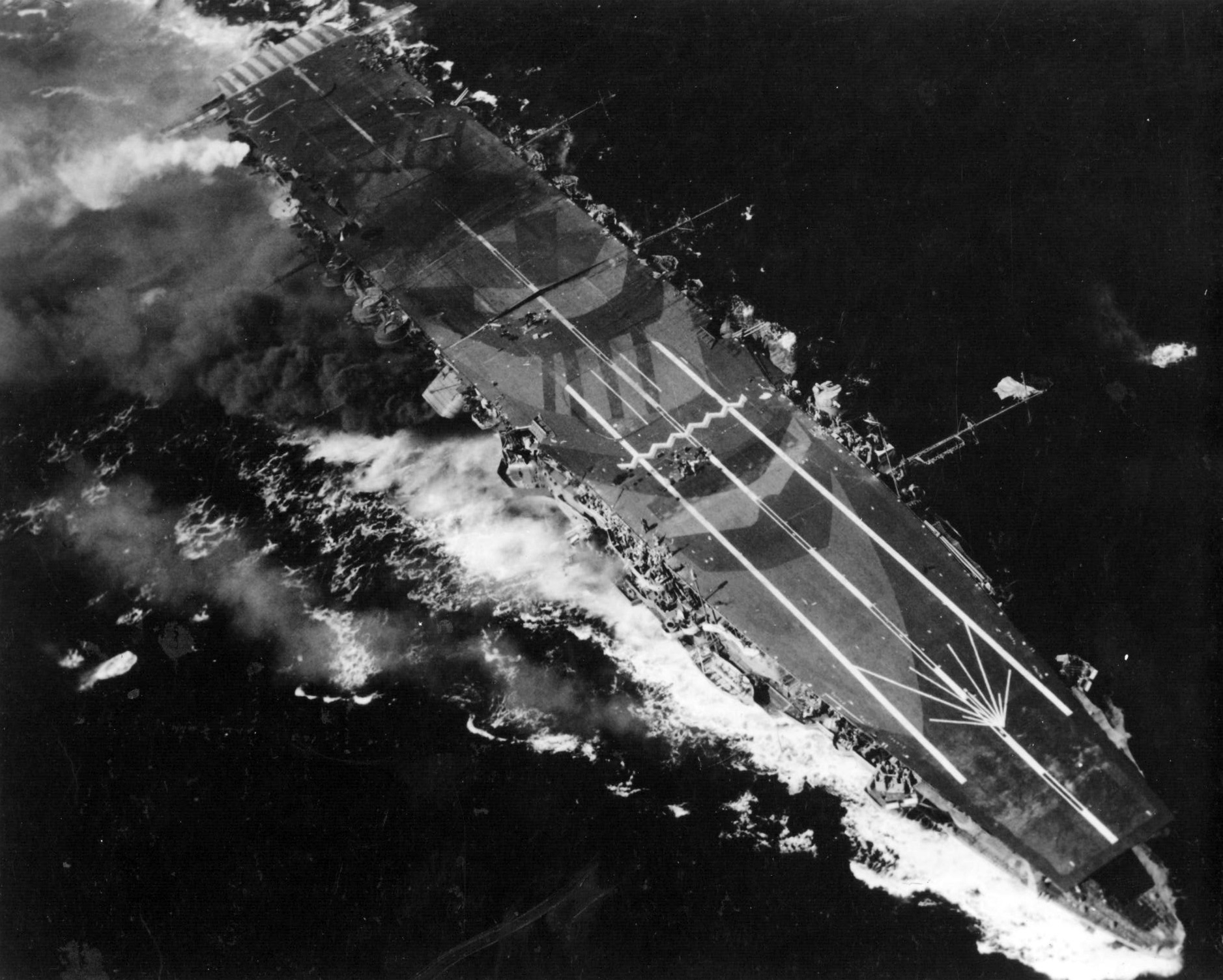
U.S. Navy. Wia Wikimedia Commons |
|
| Tonnage | 11,262 tons standard displacement |
| Dimensions | 674'3" by 59'9" by 21'7" 205.5m by 18.2m by 6.58m |
| Maximum speed | 28 knots |
| Complement | 785 |
| Aircraft | 590'6" (180m) flight deck 2 elevators 30 aircraft |
| Armament | 4x2 5"/40
dual-purpose guns 4x2 25mm AA guns |
| Machinery |
2-shaft geared turbine
(52,000 shp) 4 Kampon boilers |
| Bunkerage | 2600 tons fuel oil |
| Range | 7800 nautical miles (14,000 km) at 18 knots |
| Modification | 1943-9: Flight
deck lengthened to 632' (193m). 4x2 25mm guns removed and
16x3 25mm guns added. Type 21 radar installed. In 1944 the antiaircraft armament was again increased by 20x1 25mm guns and 6x28 antiaircraft rocket launchers. |
The Zuihos were completed in 1940 and 1942 as conversions
from Tsurigisaki (Shoho) and Takasaki (Zuiho),
which had originally been constructed as 9500-ton submarine tenders as
part of the Japanese "shadow program". These submarine tenders
were designed for rapid conversion to either light carriers or oilers as needed. Takasaki was never completed
as a submarine tender, being reconstructed while still on the ways
as a light carrier.
The Zuihos were
undistinguished ships, with small air groups, only modest speed,
and no island. Willmott (1983) assessed them as the worst of the
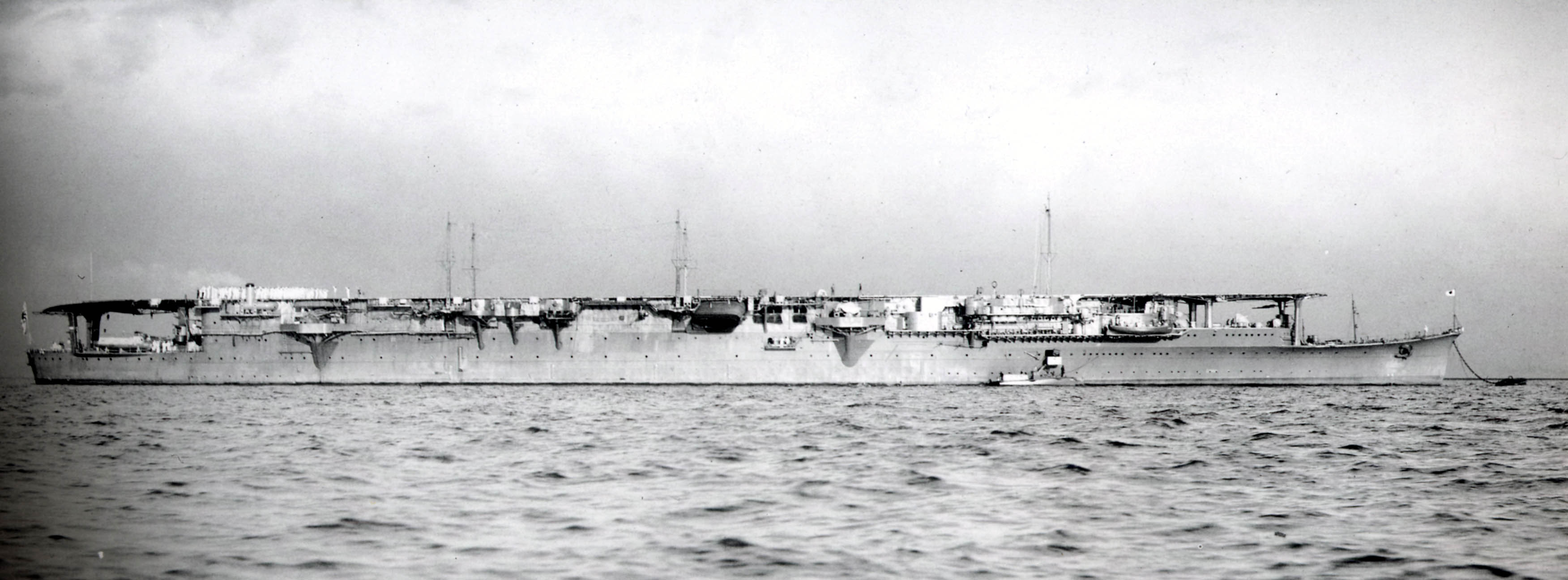
converted carriers. The ships retained their 350' seaplane hangars, but
replaced their original diesel machinery with destroyer machinery. The
flight decks narrowed considerably at their forward ends, giving
them a distinctive pointed shape.
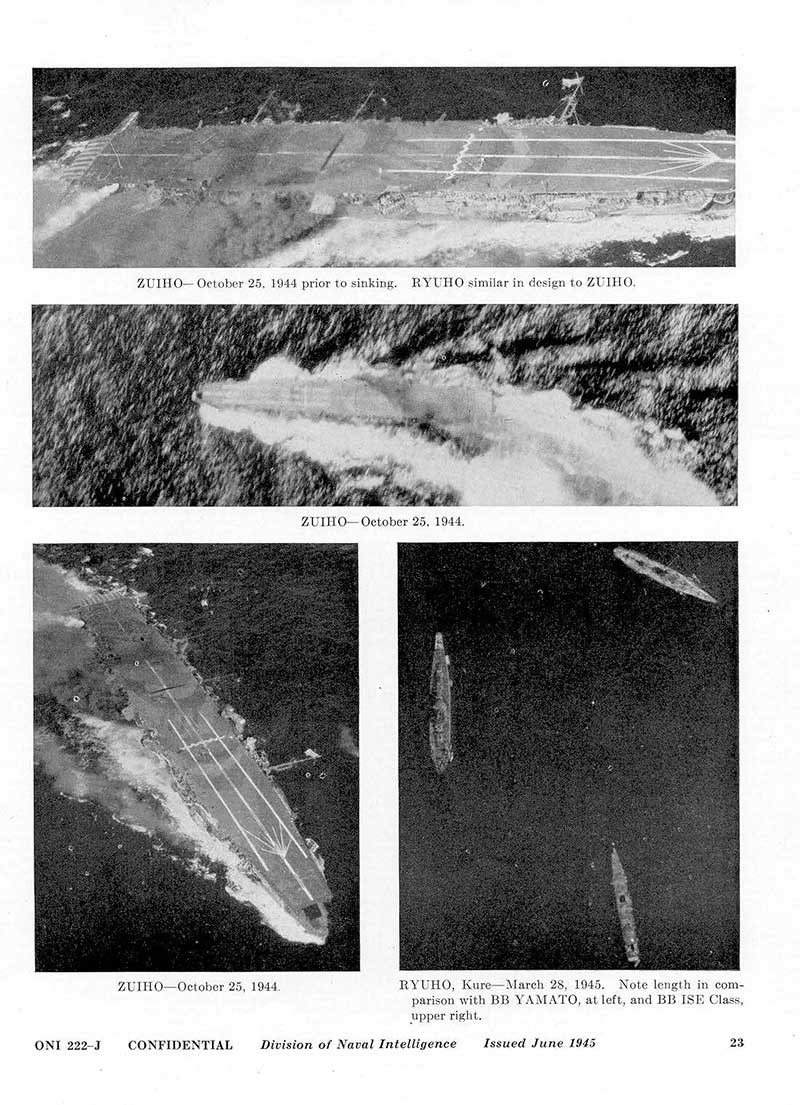
| Sunk by aircraft 1944-10-25 off Cape Engano | ||
|
Completed 1942-1 (Nagasaki) |
Sunk by aircraft 1942-5-7 off Woodlark Island |
|
|
|
References
Jentschura, Jung, and Mickel (1977)
The Pacific War Online Encyclopedia © 2007, 2009, 2016 by Kent G. Budge. Index