The Pacific War Online Encyclopedia
|
| Previous: B-10 Martin, U.S. Medium Bomber | Table of Contents | Next: B-18 Bolo, U.S. Heavy Bomber |
|
|
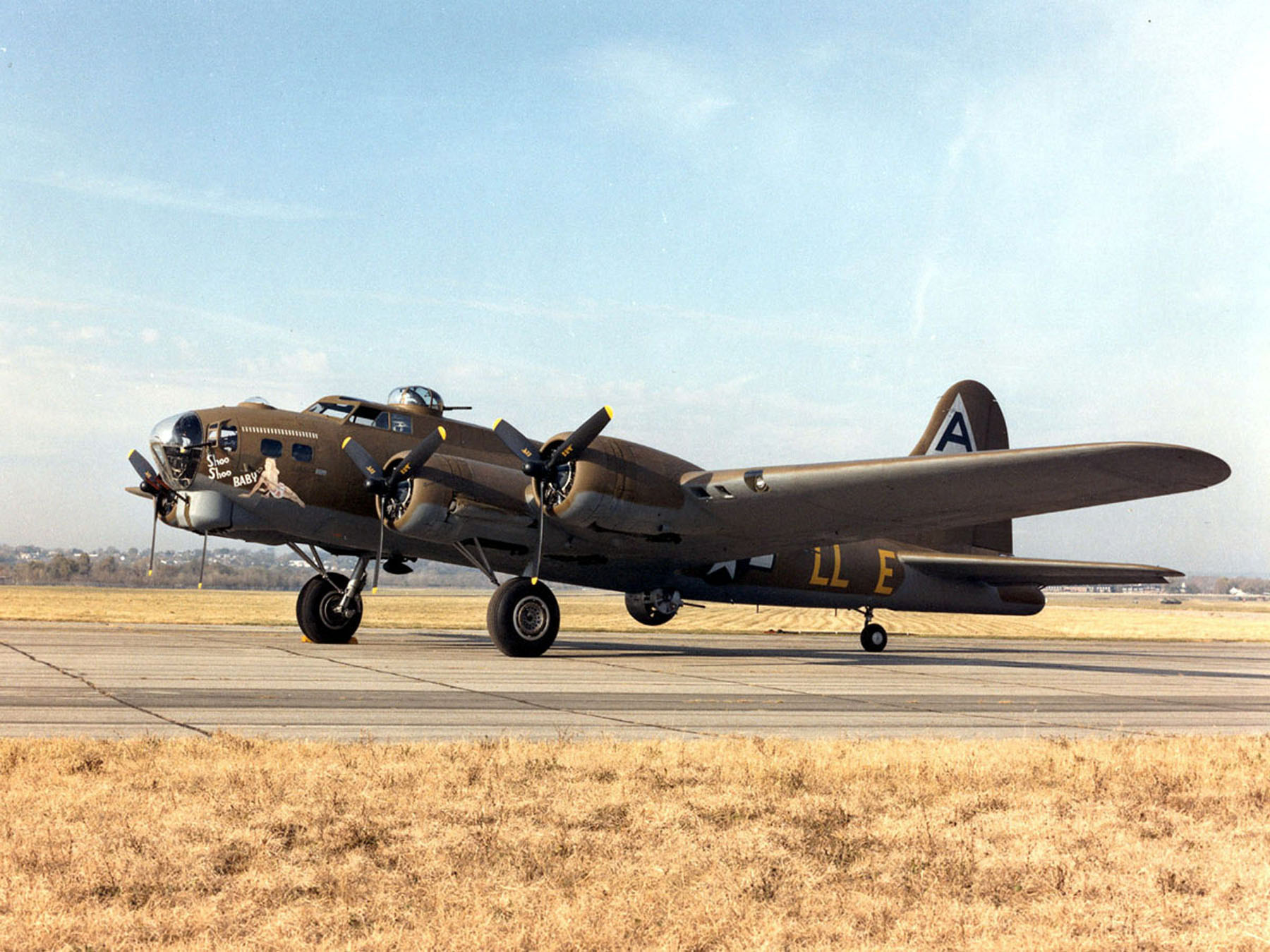
U.S. Air Force. Via Wikimedia
Commons |
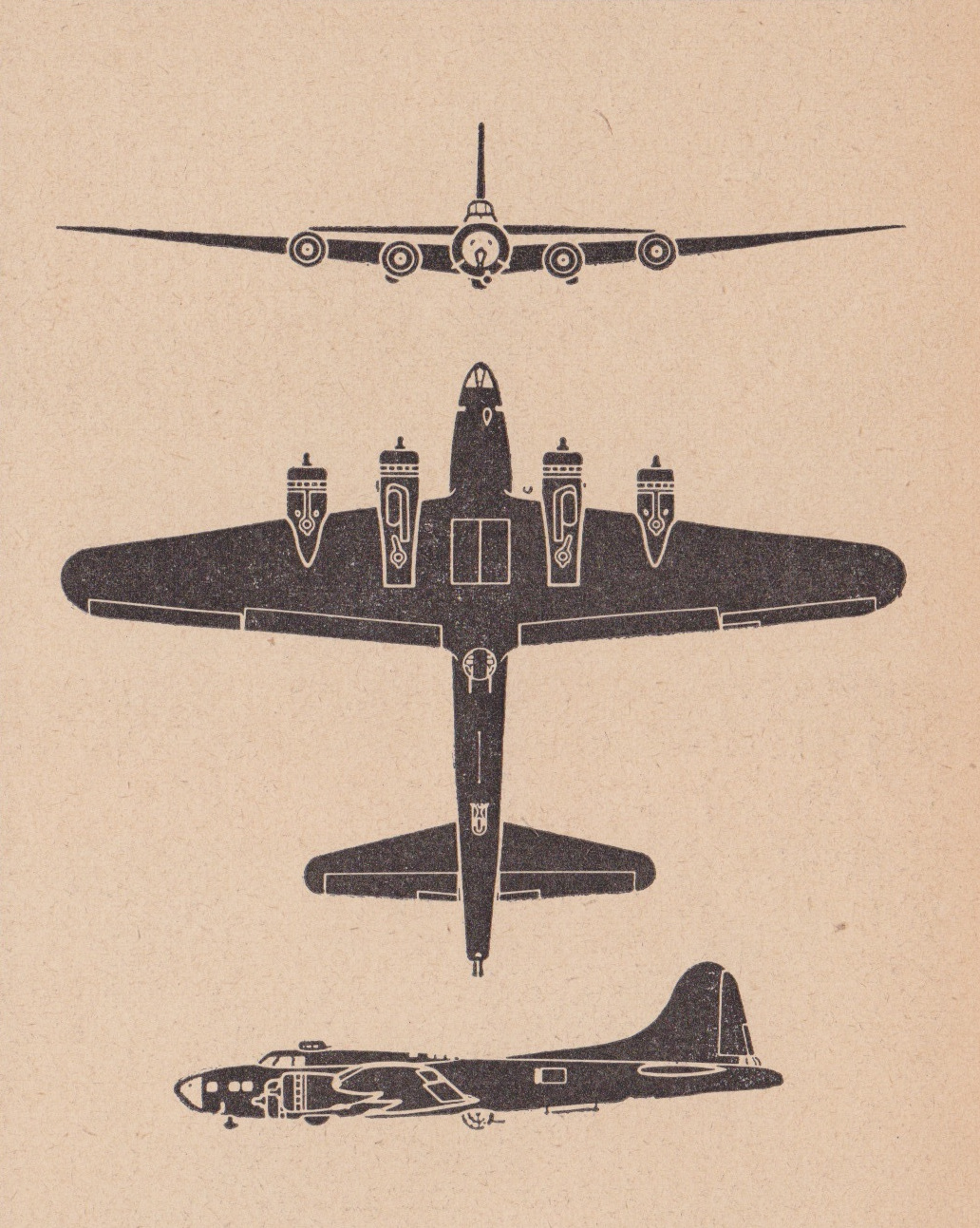
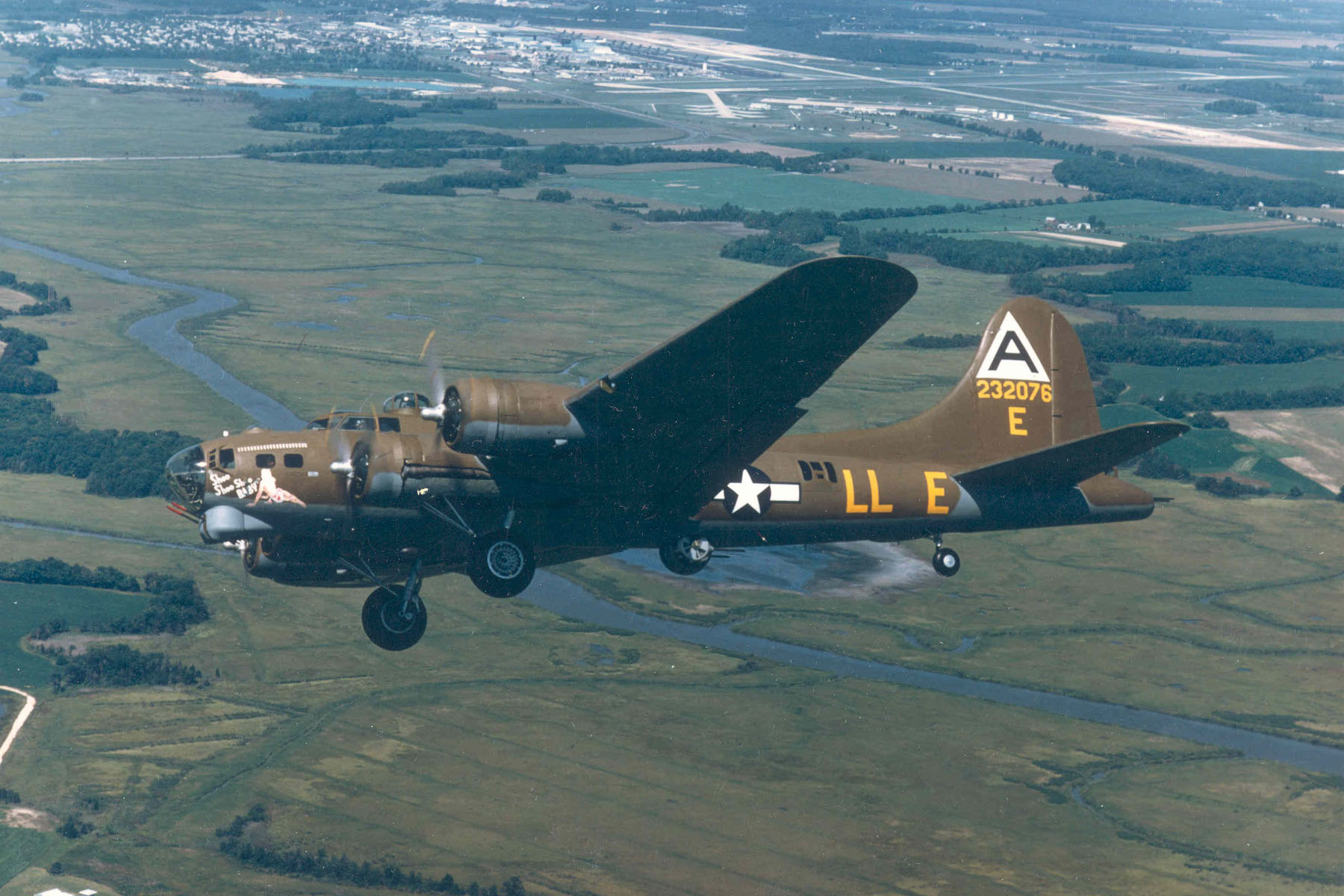
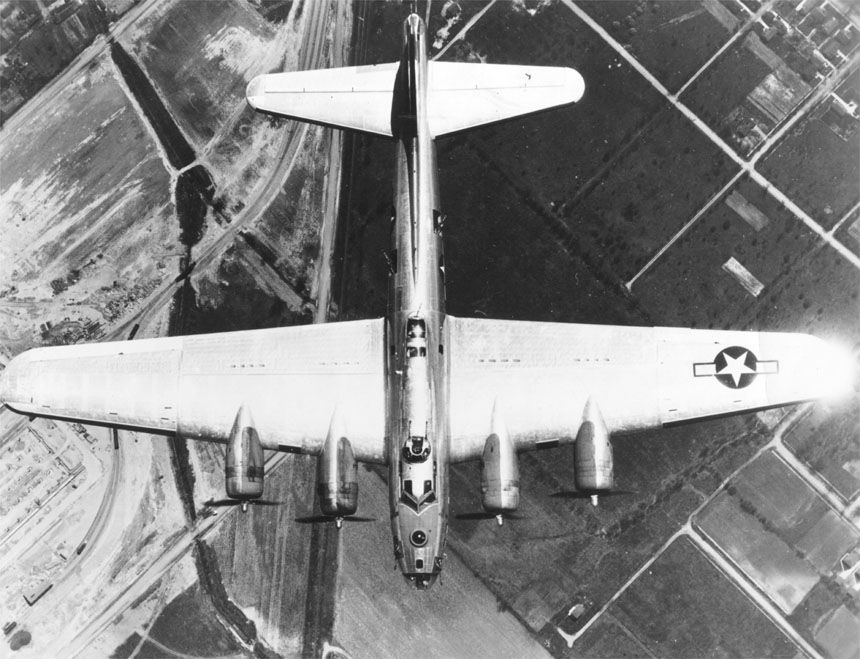
Boeing B-17E
Flying Fortress
|
Crew |
10 |
|
Dimensions |
103’9” by 67’11” by 15’5” 1.62m by 22.50m by 5.84m |
|
Wing area |
1420 square feet 131.9 square meters |
|
Weights |
33,280-53,000 lbs 15,096-24,040 kg |
|
Maximum speed |
317 mph at 25,000 feet. 510 km/h at 7620 m |
|
Cruising speed |
210 mph 338 km/h |
| Landing speed | 84 mph 135 km/h |
|
Climb rate |
22 feet per second 6.7 m/s |
|
Service ceiling |
36,600 feet 11,155 m |
| 4 1200hp (895kW) Wright Cyclone R-1820-65 Cyclone 9-cylinder radial exhaust-turbocharged engines | |
|
Armament |
1 nose 0.30
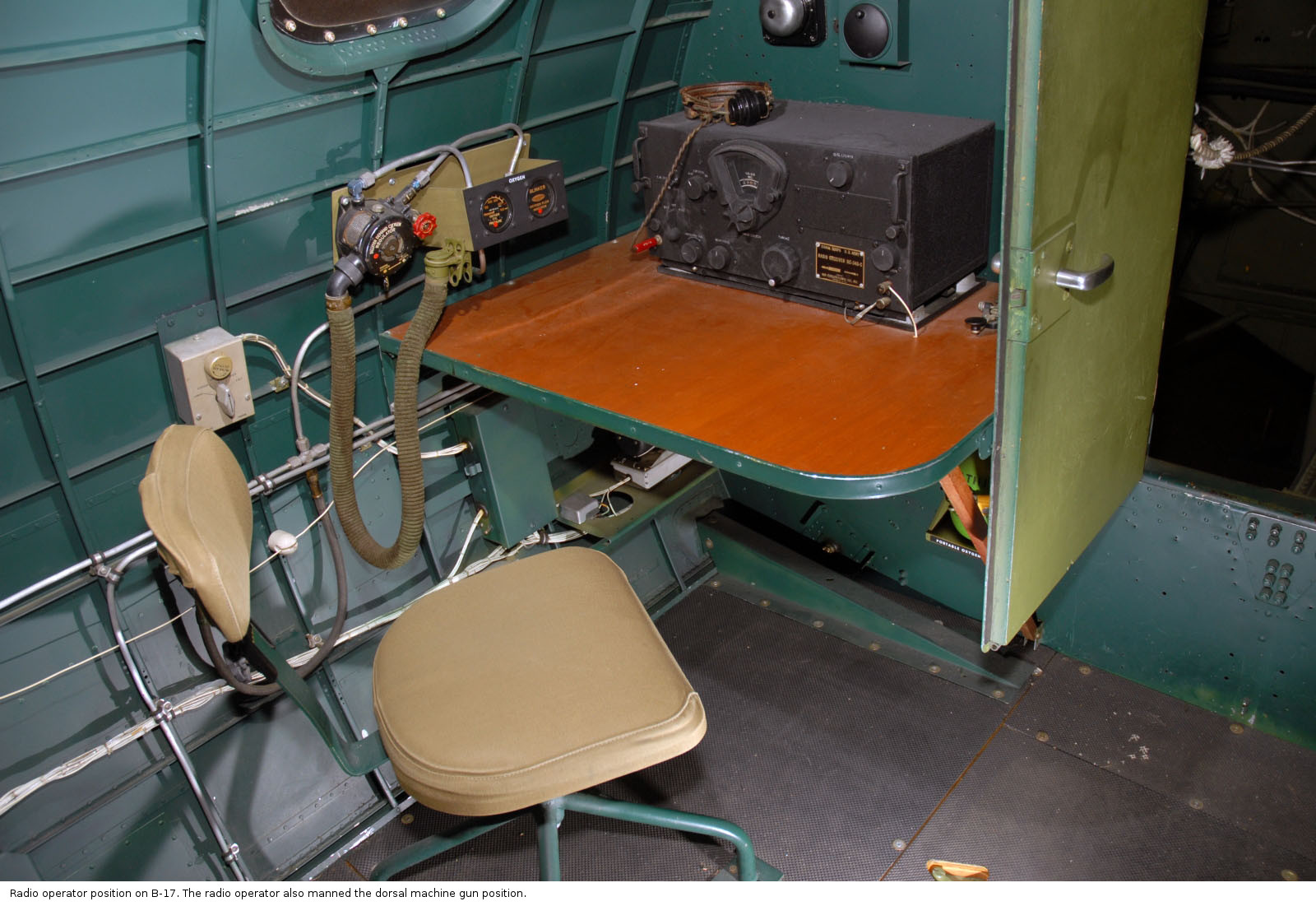
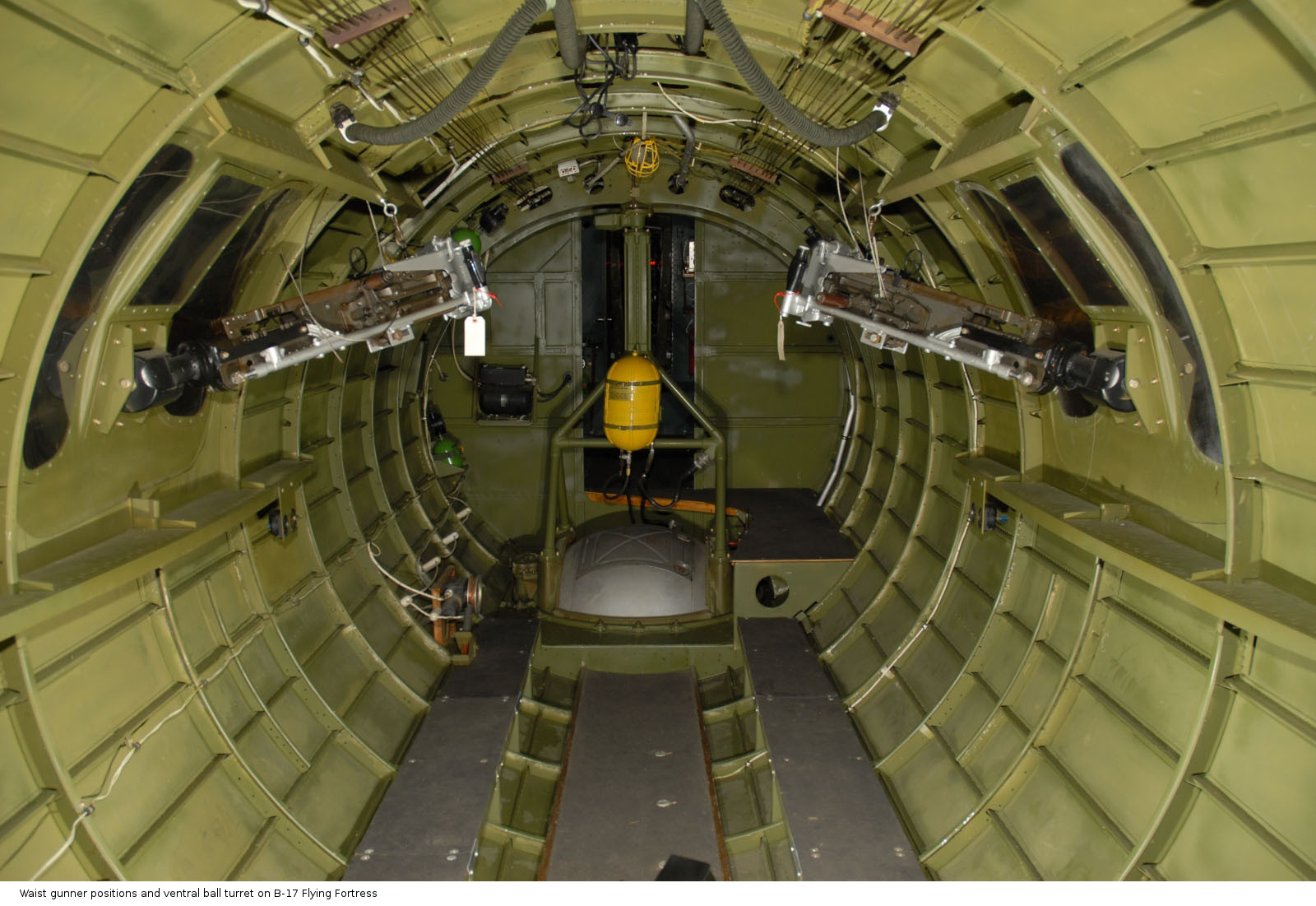
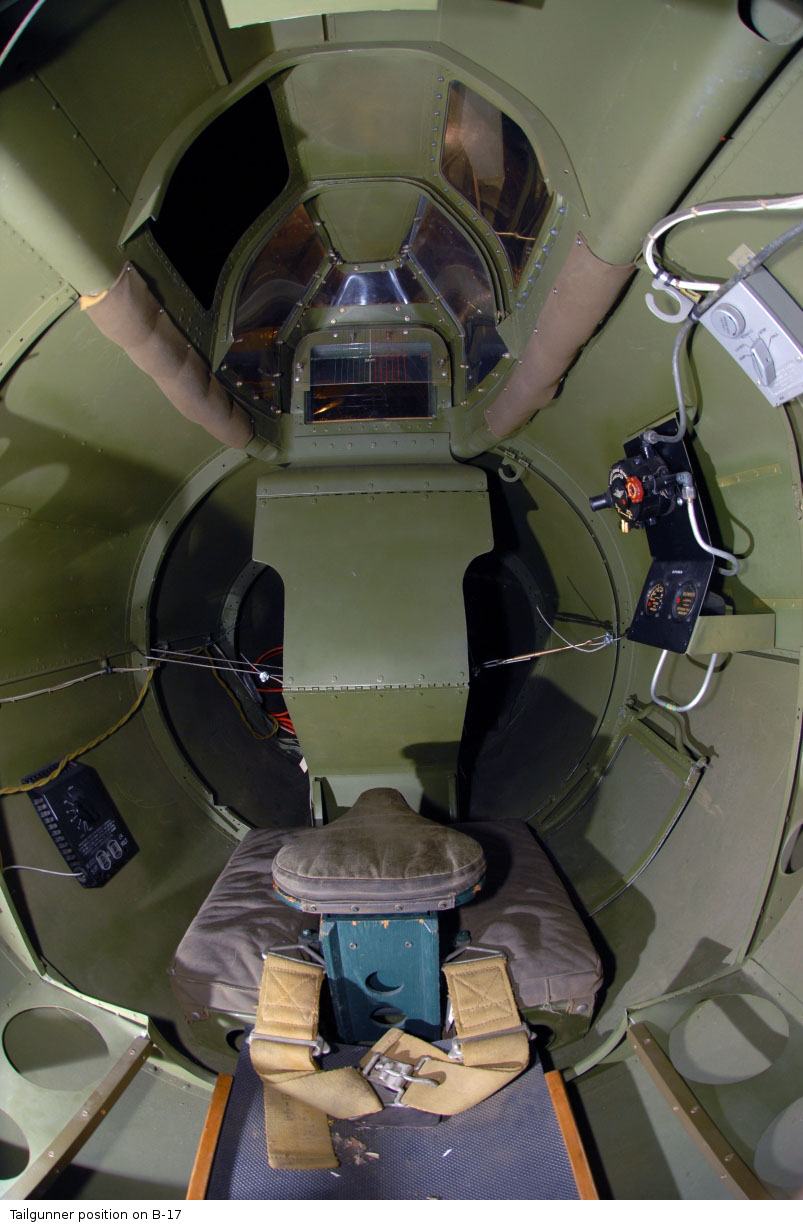
machine gun 2 waist 0.50 machine guns 2 paired dorsal turret 0.50 machine guns 2 paired ventral ball turret 0.50 machine guns 2 paired tail 0.50 machine guns |
|
Bomb load |
4,000 lbs (1815 kg) bombs or 820 gallon (3100 liter) bomb
bay fuel tanks. |
|
Range |
2000 miles at 250 mph (3218 km at 402 km/h) with 4000lb
(1800 kg) bomb load. Up to 3400 miles (5500 km) with reduced bomb load and 400 gallon (1514 liter) auxiliary bomb bay fuel tank. |
|
Maximum fuel |
2780 gallons 10,520 liters |
| 12,731 of all types at Boeing Airplane Co, Seattle, WA;
Vega Aircraft Corporation, Burbank, CA; and Douglas Aircraft Company, Tulsa, Oklahoma. 119 B-17B, C, and D 512 B-17E 3405 B-17F 8680 B-17G |
|
|
Variants |
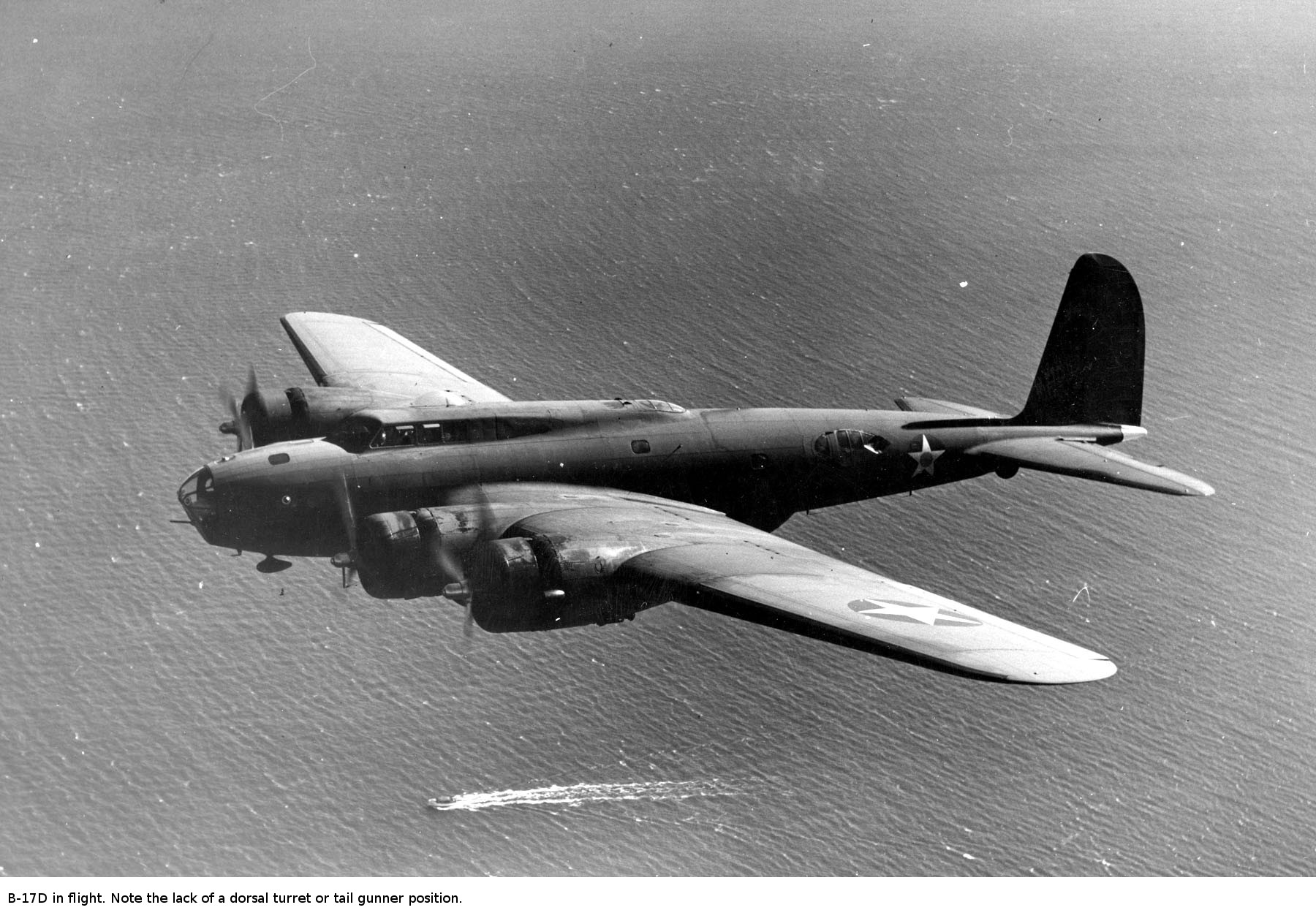
The B-17B, C, and D lacked tail guns
and had a ventral blister rather than the ball turret.
They also had smaller tails, which reduced stability for
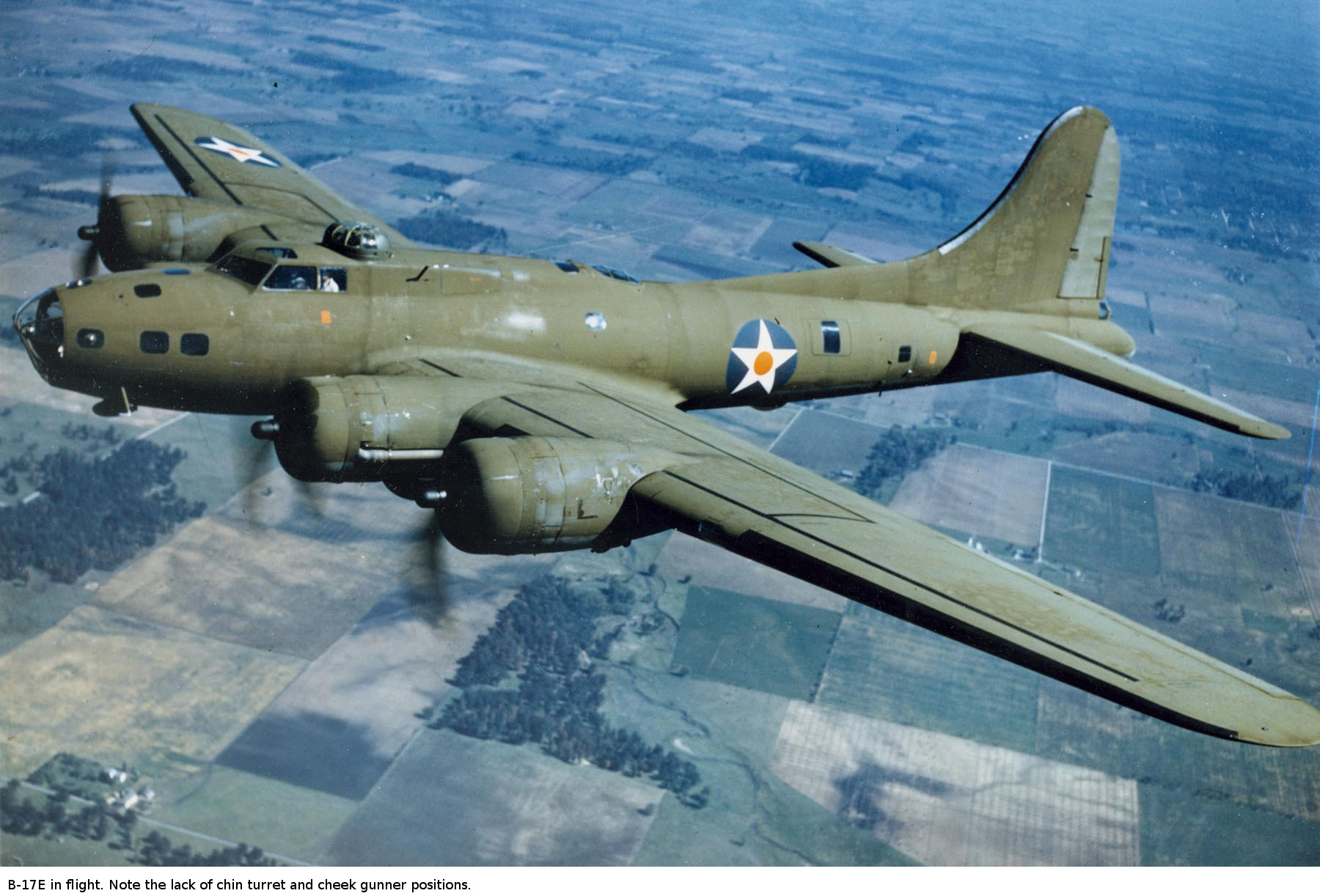
accurate bombing. Beginning with the 113th production unit, the B-17E replaced the awkward remote controlled ventral ball turret with the Sperry ball turret used in all subsequent versions The B-17F used R-1820-97 engines
giving it an emergency speed of 314 mph (505 km/h), and it
added two 0.50 waist guns. It had extra wing fuel cells
("Tokyo tanks") containing 1100 gallons and extending its
range by about 1000 miles (1600 km). The B-17G was the definitive model,
with an added chin turret having two 0.50 machine guns for
increased forward protection. However, its increased
weight (38,000 lbs or 17,000 kg empty) reduced its
cruising speed to little better than 160 mph (260 km/h)
and its range by about 700 miles (1400 km). The PB-1W was under development by the Navy at the time of the Japanese surrender. It would have carried a powerful airborne radar and fighter controllers, prefiguring the modern AWACS aircraft. |
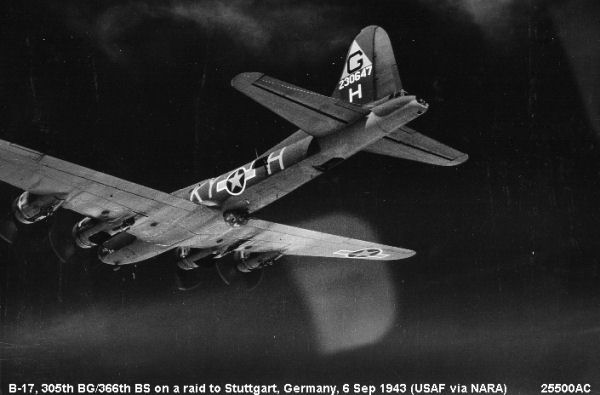
The B-17 Flying Fortress was the first true strategic bomber and the iconic American heavy bomber of the Second World War. It was an extremely rugged and reliable aircraft, with very sedate handling that allowed many a pilot to bring his badly damaged aircraft home. It was deployed by the thousands to Europe and was the backbone of the strategic bombing campaign against Germany until well into the war. However, the B-17 failed to live up to expectations that it could defend itself in enemy airspace, though it gave the Japanese a harder time than the Germans because the German fighters were armored and much sturdier than Japanese fighters. Its Norden bomb sight was amazingly accurate – in the absence of cloud cover, wind shear, and flak. Under real combat conditions, accuracy varied from fair to abysmal. The B-17 also never lived up to expectations that it could interdict shipping: Its crews found that hitting a moving target from five miles (8 km) up was almost impossible. However, under the right conditions, the B-17 could do massive damage to stationary targets, such as airfields, ports, and troop concentrations.
The aircraft had a long gestation, with elements of the design going back to the 1930 Model 200 Monomail, of which only two were built. Other projects that contributed elements to the design included the Model 215 YB-9 "Death Angel" twin engine bomber, the Model 247 twin engine transport, and the XB-15. Boeing barely recovered its costs on these experimental designs, with the YB-9 losing the Air Corps production contract to the Martin B-10 and the Model 247 losing out to the Douglas DC-2 and DC-3. Boeing took an additional enormous gamble in investing $275,000 in the Model 299, the prototype for the B-17, interpreting the Air Corps request for a "multiengine bomber" to include four-engine designs. The B-17 was dubbed the Flying Fortress by Seattle Times newspaper reporter Dick Williams when the prototype was rolled out for its first flight on 28 July 1935.
Boeing very nearly lost their gamble: When the prototype crashed on 30 October 1935, killing the test pilot, skepticism of the design grew in spite of an investigation showing the crash was due to failure to unlock the control surfaces. Working under the tight budgets of the Great Depression, the Air Corps initially purchased just thirteen YB-17s and allocated the rest of the bomber budget to purchasing 133 of the much cheaper, but also much less capable, B-18. However, many Air Corps officers regarded the B-17 equipped with the Norden bombsight as the embodiment of their doctrine of pinpoint strategic bombing. Thus, the Air Corps and Boeing found a common interest in promoting the new strategic bomber, and the initial thirteen YB-17s were given extensive publicity by both organizations.
An important publicity exercise was the Good Will
Missions to South America. The first was flown on 15 February 1938
from Langley Field to Buenos Aires, Argentina, and participants
included such future senior officers as Curtis LeMay and Caleb Haynes. The round
trip took twelve days, broke records, and won the Mackay Trophty
for that year. A second Good Will Mission to Brazil left on
November 10.
The aircraft underwent extensive modification over its production run, so that the original B-17 and the B-17G hardly appeared to be the same aircraft. Early improvements included the YB-17A, the first turbosupercharged heavy bomber. The B-17C, which was the first model to see combat, incorporated some but not all of the lessons of the early years of the Second World War, while the B-17E was the first fully modernized model. Delivery of the B-17E was delayed by a dispute over the pricing of the model, and the awkward remote controlled ventral ball turret, which apparently never hit a target in anger, was not replaced with the more practical Sperry ball turret until 112 units had already been delivered Production was greatly expanded in late 1941 when Douglas and Lockheed Vega began manufacturing the B-17F under license. The XB-40, an otherwise unsuccessful escort version, demonstrated the value of a chin turret, and this was adopted for the definitive B-17G, which went into production in mid-1943. Most B-17s were equipped with bombing radar by the beginning of 1944.
As a long-range strategic bomber, the B-17 had a heating
system and provisions for heated flight suits for its crew. It had
four separate oxygen systems with sixteen outlets, plus
walk-around bottles, with a total capacity of 72 man-hours. The
crew were protected by patches of armor plating, with the pilots
having the most protection (armored seats and forward and aft
armored bulkheads and the ball turret gunner the least (a small
seat patch).
Two squadrons of B-17s were in the Philippines when war
broke out, with additional squadrons on the way. Many of those in
the Philippines were the obsolescent C and D models, with their
inadequate defensive armament, which were regarded by Boeing and
the Air Corps as suitable only for training purposes. The
reinforcements were diverted elsewhere (mostly Australia and the Netherlands East
Indies) when it became clear that the Japanese were firmly
in control of the air over Luzon.
Over half of all B-17 crews were deployed to the Pacific during
the first year of the war, but by mid-1943 the B-17 was being
rapidly replaced by the B-24,
whose longer range made it more suitable for the vast distances of
the Pacific. The B-17 was also preferred for European service
because of its perceived ruggedness and higher service ceiling. By
September 1943, the B-17 had been completely withdrawn from
regular squadron service in the Pacific, though a small number of
B-17s converted to transport or air and sea rescue
remained in the theater. No B-17Gs saw regular squadron service in
the Pacific, though eight modified SB-16Gs saw service with 4
Emergency Rescue Squadron. Had the war continued longer, the PB-1W
with its powerful airborne radar might have seen service in the invasion of Japan.
Though much emphasis was put on the B-17 as a coastal
defense aircraft in the late 1930s, it proved a dismal failure in
this role at Midway, where
B-17s dropped 315 bombs on Japanese ships without scoring a single
hit. On the other hand, the B-17 found an unexpected small role
intercepting Japanese flying
boats off Guadalcanal
in the autumn of 1942, claiming two destroyed and one damaged. The
B-17 had the advantages of greater speed and armament and
comparable armor protection to
the Mavis.
The B-17 remained in production until May 1945. The average cost of production dropped from $301,221 in 1939-1941 to $187,742 per unit when production ended.
|
|
|

|

|

|
|
|
|

|
|
|
References
The Pacific War Online Encyclopedia © 2007, 2009, 2011, 2013-2014, 2016, 2017 by Kent G. Budge. Index